Translate and Rule
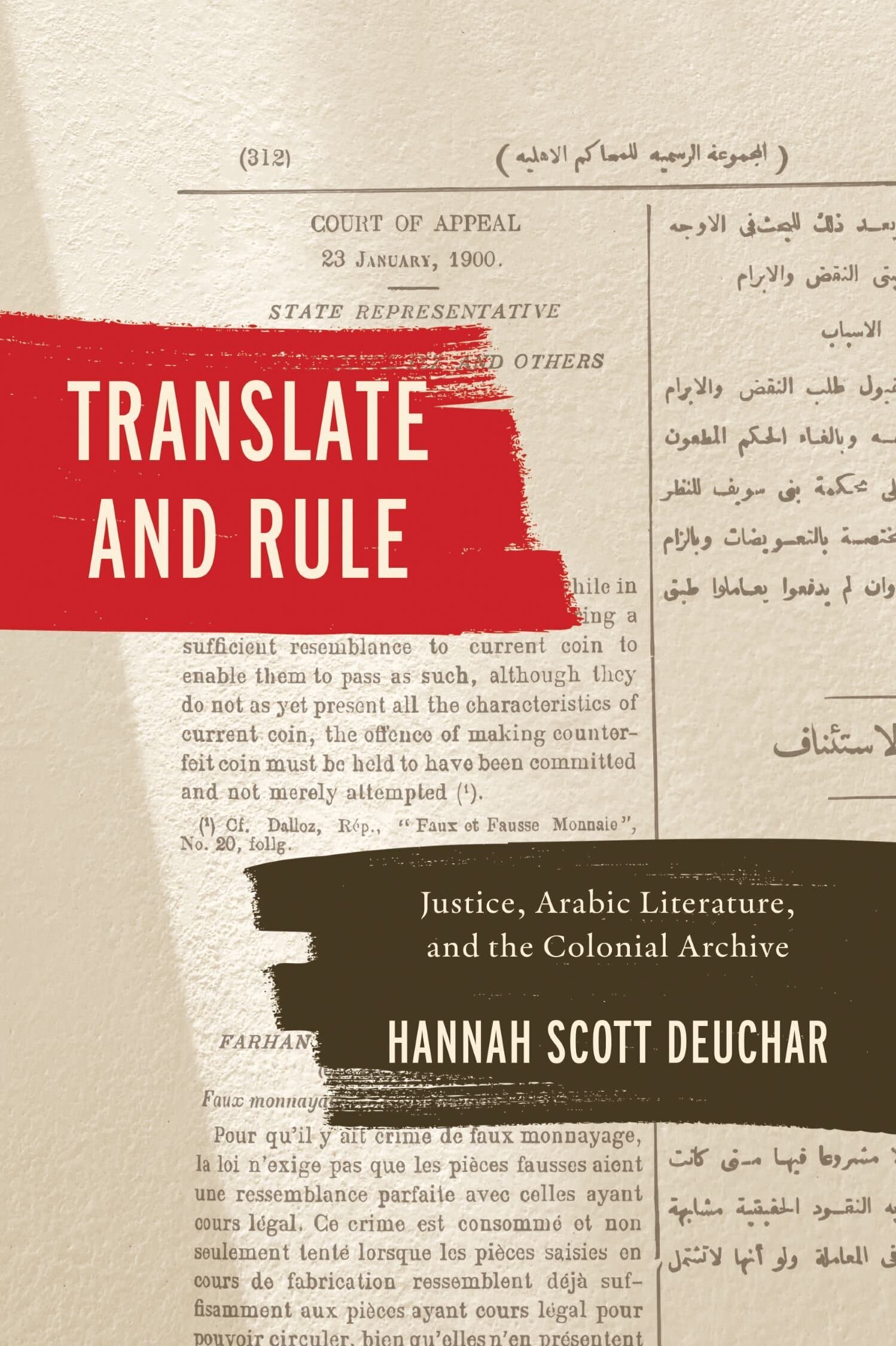
Over the decades of the nineteenth century, Egypt changed dramatically, from a minor Ottoman province to a major player in global markets and a de facto British colonial territory. Integral to this transformation was legal reform: the Islamic system was replaced by laws adapted from the French Napoleonic code, edited by international committees, rendered in several languages, and applied in multilingual secular courts. Translation made law possible for Egyptians navigating international commerce and imperial rule. But translation also enshrined hierarchies of difference and remade ideas and theories of justice.
Translate and Rule argues that translation played a central role not only in colonial lawmaking, but also in anticolonial Arabic thought. Combining methods from literary and legal history, Hannah Scott Deuchar shows how translated legal codes in colonial Egypt exacerbated inequities in the courtroom and transformed relations of commerce and property ownership. These legal vocabularies and grammars also transformed Arabic itself, and Scott Deuchar analyzes how Arabophone authors, lawyers, and translators debated and challenged conceptions of language and linguistic exchange in literary and media spheres. As aspects of Egypt's legal pluralism were adopted elsewhere, seminal literary works from Egypt, Sudan, and Palestine theorized translation's role in colonial, juridical, and material violence—and offered new modes of reparation and ethical solutions premised on translingual solidarity across incalculable inequivalence.
"Hannah Scott Deuchar's richly polyphonic, sophisticated study of the long-nineteenth-century Egyptian legal and literary archive reveals that even as Egypt's subjection to imperial capitalism drove Islamic and European law into equivalence, counter-imperial translations resignified European law in Islamic terms—and, prefiguring later anticolonial fictions, reimagined justice in inter-theological frames beyond the law itself. A remarkably impressive debut."
—Shaden M.Tageldin, University of Minnesota
"With much fluency and erudition, Hannah Scott Deuchar not only traces how modern colonial logics of translational equivalence and juridical valuation have flattened the Arabic language but also listens to its rhythms as they return from a past that cannot be historicized away. By attuning to linguistic openings that are incongruous with colonial regimes of law and translation, Translate and Rule articulates a recurring limit to colonial violence—a necessary articulation in this narrow time."—Samera Esmeir, University of California, Berkeley